

Harsh Rathore
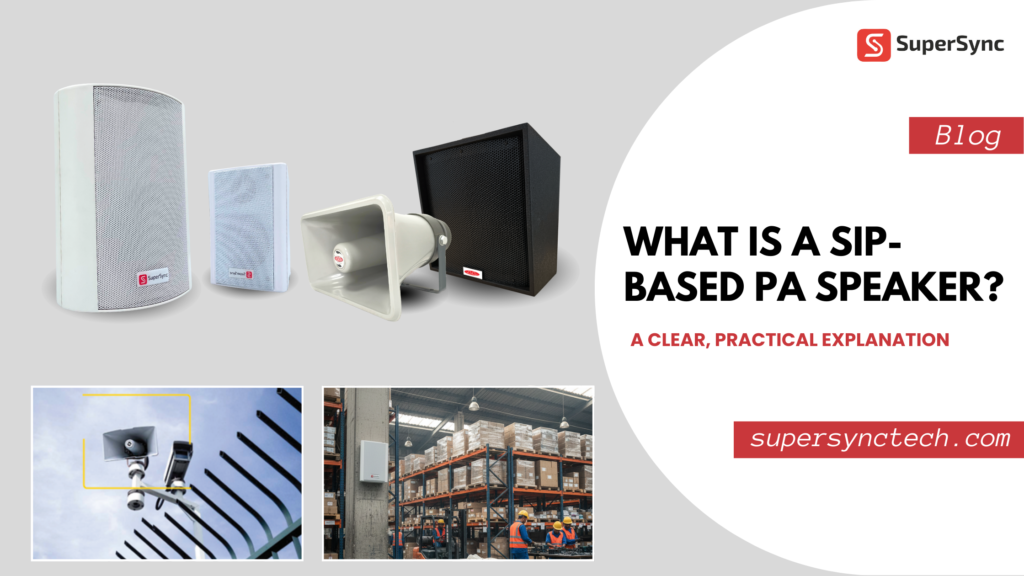
What Is a SIP-Based PA Speaker? A Clear, Practical Explanation
21 December 2025
Introduction: Why SIP Is Entering the PA World
Public Address (PA) systems have traditionally been built around analog architectures, centralized amplifiers, and dedicated control hardware. Over the last decade, as IT infrastructure became a standard part of buildings, PA systems also began evolving toward IP-based designs.
This transition has introduced new terminology into the market—IP speakers, network speakers, SIP speakers—often used interchangeably, despite representing different architectural approaches. As a result, system integrators, consultants, and buyers frequently encounter confusion when evaluating IP-based PA solutions.
One protocol increasingly discussed in this context is SIP. SIP has long been an established standard in telecom and VoIP environments, where it is used for call signaling, session control, and interoperability across multi-vendor systems.
Its adoption in PA applications is driven less by novelty and more by a growing demand for open, IT-aligned, and interoperable communication systems. To use SIP-based PA solutions effectively, it is essential to understand what they are, how they work, and where they fit within modern PA system design.
If you’ve ever struggled with vendor lock-in or wondered how PA systems fit into modern IT networks, SIP is the missing link.
What Is a SIP-Based PA Speaker?
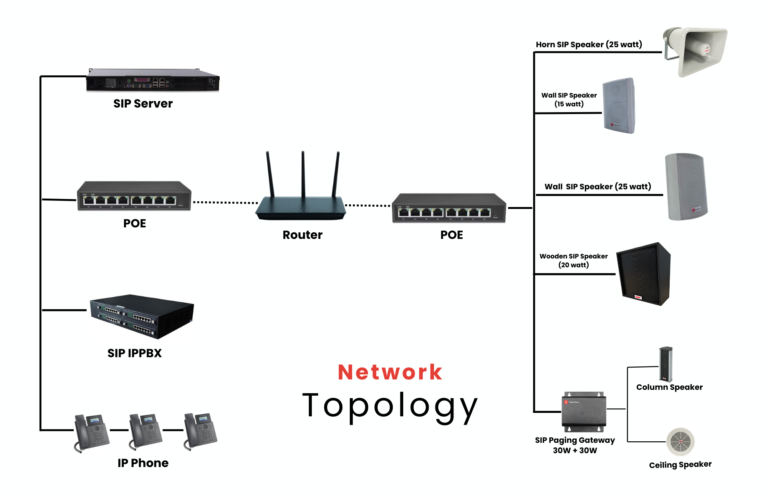
A SIP-based PA speaker is a network-enabled audio endpoint that uses SIP for call signaling and session control, similar in principle to other VoIP devices such as IP phones or SIP intercoms.
In a typical deployment:
- The speaker connects to the IP network
- It registers itself to a SIP server or IP-PBX as a SIP endpoint
- Paging or announcement sessions are initiated using standard SIP call logic
- Audio is delivered to the speaker for playback
While SIP as a protocol fully supports bi-directional audio communication, most devices categorized specifically as PA speakers are architecturally and acoustically optimized for broadcast-oriented use cases, such as announcements, alerts, and paging.
Two-way communication over SIP is commonly implemented using dedicated SIP intercoms or talkback panels, which are purpose-built with microphones, echo cancellation, conversational audio tuning, and user interaction logic.
This distinction is important: protocol capability and device intent are not the same thing. SIP-based PA speakers focus on scalable, reliable audio distribution, whereas SIP intercoms focus on interactive communication.
“Think of a SIP PA speaker as an IP phone without the handset — it listens instead of talks.”
How a SIP-Based PA Speaker Works (Call Flow Overview)
From a functional perspective, SIP-based PA speakers operate using well-established VoIP principles.
A simplified call flow is as follows:
- The SIP PA speaker connects to the network and is powered, typically using Power over Ethernet (PoE).
- The speaker registers to a SIP server or IP-PBX using assigned credentials.
- A paging call is initiated by dialing a specific extension or paging group.
- The SIP server establishes the session using SIP signaling.
- Audio is transmitted to the speaker using real-time media streams.
- The speaker decodes and plays the announcement.
Because the speaker behaves like a SIP endpoint, it becomes part of the same communication ecosystem as IP telephony, rather than operating as an isolated PA subsystem.
SIP-Based PA vs Traditional and Proprietary IP PA Systems
IP-based PA systems are not all built on the same architectural philosophy. Broadly, they can be categorized into two approaches.
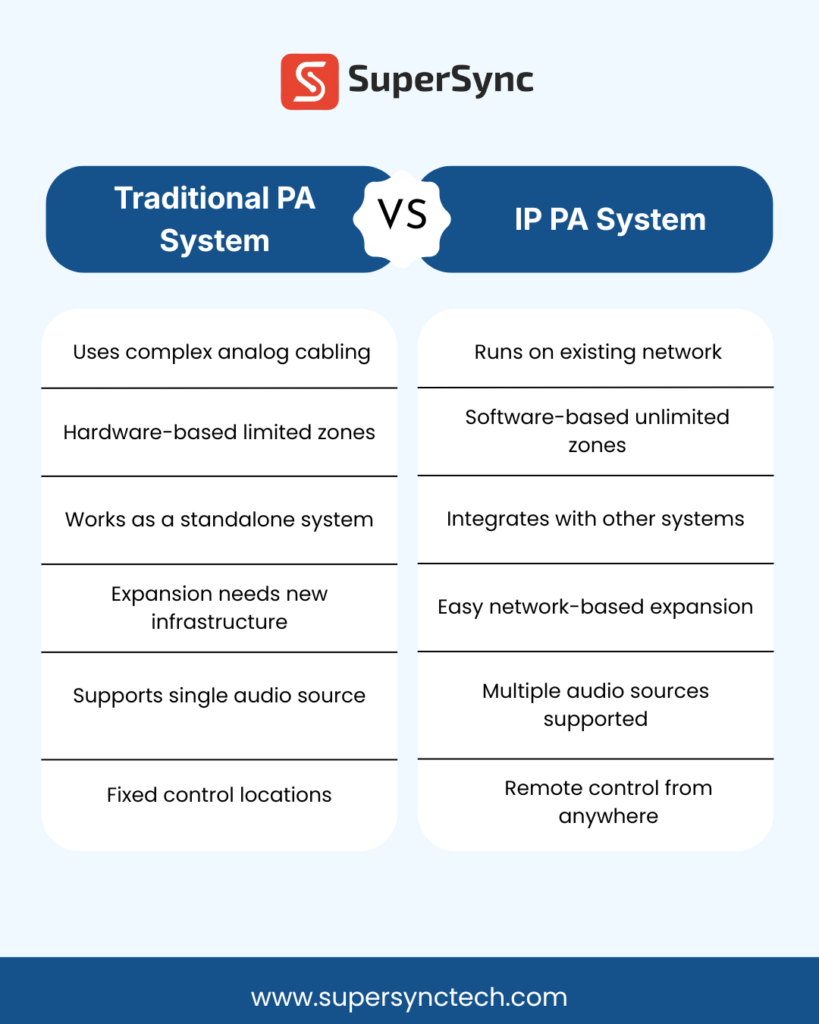
Traditional or proprietary IP PA systems typically:
- Use vendor-specific signaling and control protocols
- Require dedicated controllers or servers
- Operate within tightly coupled ecosystems
- Offer limited interoperability outside the vendor’s platform
SIP-based PA systems, by contrast:
- Use an open and widely adopted signaling protocol
- Integrate with standard SIP servers or IP-PBX platforms
- Align more closely with IT and VoIP infrastructure
- Reduce dependency on a single manufacturer
Proprietary systems can offer tightly optimized feature sets for specific applications. However, this often comes with trade-offs related to vendor lock-in and long-term flexibility. SIP-based PA systems prioritize openness and lifecycle adaptability, which is increasingly valued in enterprise and institutional projects.
Where SIP-Based PA Speakers Are Commonly Used
SIP-based PA speakers are most effective in environments where IP networking and VoIP infrastructure already exist or are planned as part of the building design.
Common applications include:
- Corporate offices and enterprise buildings
Where SIP speakers integrate directly with IP-PBX systems for live and scheduled paging. - Educational institutions
Each SIP speaker can be assigned a unique extension or grouped logically, enabling:- Room-wise paging
- Zone-based announcements
- Campus-wide broadcasts
This supports assemblies, class transitions, and administrative communication.
- Hospitals and healthcare facilities
SIP-based PA speakers are widely used for operational and non-life-safety paging, such as staff notifications and routine announcements.
For life-safety voice evacuation, system designers must ensure that the overall PA architecture meets applicable regulatory and certification requirements. - Industrial facilities and manufacturing plants
For shift change announcements, safety instructions, and operational alerts within IT-managed networks.
Across these environments, SIP-based PA speakers benefit from centralized management, IP-based routing, and seamless integration with VoIP systems.

Applications Where SIP-Based PA Speakers May Not Be the Best Fit
Despite their flexibility, SIP-based PA speakers are not intended to replace all forms of audio communication devices.
They may not be the optimal choice for:
- Applications requiring continuous, conversational two-way communication
Such as security intercoms, help points, or access-controlled entry systems, where dedicated SIP intercom devices provide better acoustic performance and user experience. - Certified life-safety voice evacuation systems
Unless the complete system—including speakers, network design, redundancy, supervision, and power backup—meets relevant regulatory and certification standards. - Poorly designed or unmanaged networks
Where lack of Quality of Service (QoS), VLAN segregation, or redundancy can negatively impact real-time audio performance.
These limitations are related to device design intent and system-level requirements, not inherent shortcomings of the SIP protocol itself.
Network and Infrastructure Considerations
As IP endpoints, SIP-based PA speakers rely heavily on network design and reliability.
Key considerations typically include:
- Availability of PoE
- VLAN segmentation for voice traffic
- QoS configuration to prioritize audio
- Network monitoring and fault detection
- Planning for scalability and redundancy
While these requirements are standard in VoIP environments, they become particularly important when audio delivery is part of daily operations.
“One of the most common mistakes is deploying SIP speakers on unmanaged networks without QoS — leading to choppy audio.”
Why Open SIP Matters for Long-Term Deployments
One of the primary advantages of SIP-based PA systems is their openness.
Open SIP implementations allow:
- Freedom to select or change IP-PBX platforms
- Easier expansion and phased upgrades
- Reduced dependence on a single OEM
- Better alignment with IT standards and procurement policies
For consultants and long-term project owners, this openness often translates into lower lifecycle risk, improved maintainability, and greater future readiness.
Conclusion: SIP-Based PA Is a Tool, Not a One-Size Solution
SIP-based PA speakers are neither a universal replacement for all PA systems nor a marketing-driven trend. They are a practical and powerful tool when applied in the right context.
When selected thoughtfully, they offer openness, flexibility, and seamless integration with modern IT infrastructure. When selected without proper system design or expectation management, they can introduce avoidable limitations.
As with any communication technology, understanding the application, environment, and system requirements is more important than the technology label itself.
“SIP-based PA speakers aren’t just another buzzword—they’re a cornerstone of future-ready communication. As this series continues, we’ll dive deeper into how organizations can leverage SIP to build scalable, interoperable PA systems.”
While this article focuses on explaining what a SIP-based PA speaker is and how it fits into modern PA architectures, the broader question in many projects is how SIP-based systems compare with proprietary IP PA platforms. That architectural comparison—and the trade-offs it introduces—will be explored in the next article in this series.