

Harsh Rathore
Why Manufacturing Businesses Grow Slower Than Subscription Platforms
Wednesday 04 Feb 2026
“SaaS companies grow fast because customers don’t need to trust them upfront.
Manufacturers don’t get that luxury — and that’s exactly why they endure.”
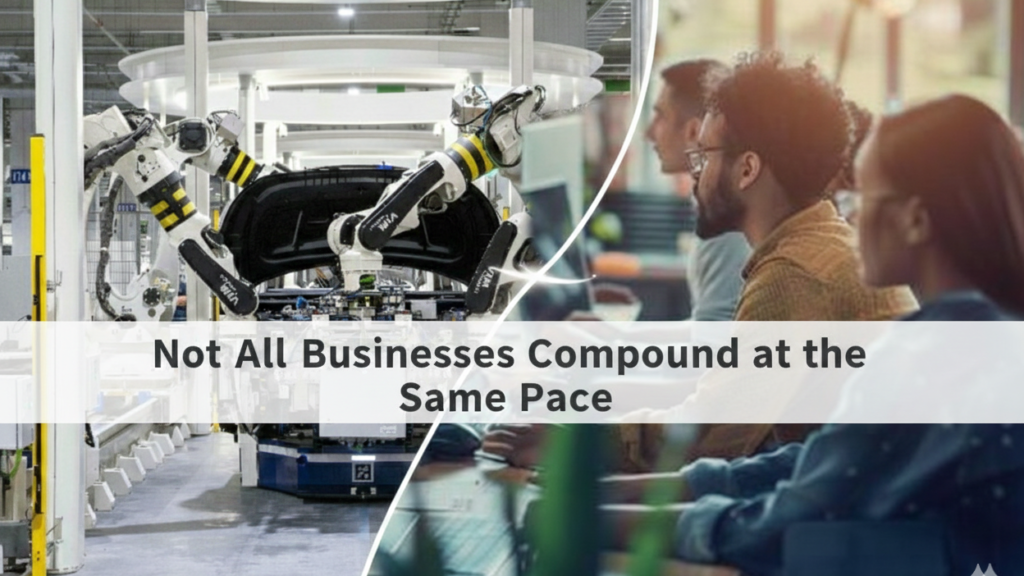
For years, we’ve tried to explain growth by comparing product-based businesses with service-based businesses.
But that distinction no longer captures what’s really happening.
Software behaves like a service.
Services behave like products.
Platforms blur the line entirely.
The real difference today lies elsewhere.
It lies between businesses that must earn trust before they scale and businesses that are designed to scale before trust is fully earned.
Understanding this difference is essential — not to discourage manufacturing, but to appreciate why different business models grow at different speeds and endure for different lengths of time.
The Reality of Manufacturing-Led Businesses
Companies built on manufacturing — electronics, appliances, textiles, industrial equipment — operate under a fundamentally different trust equation.
They require:
- Heavy CapEx before demand is proven
- Production lines before reputation is built
- Inventory before feedback is available
- Distribution and service networks before credibility exists
Most importantly, trust is earned only after usage.

A customer does not fully trust a refrigerator, appliance, or electronic product on day one.
Trust forms after months — sometimes years — of performance, service response, and reliability.
This means:
- Growth is slower
- Feedback loops are long
- Mistakes are expensive
- Reputation compounds gradually
Manufacturing businesses must prove trust first, and scale later.
This is not inefficiency.
This is discipline.
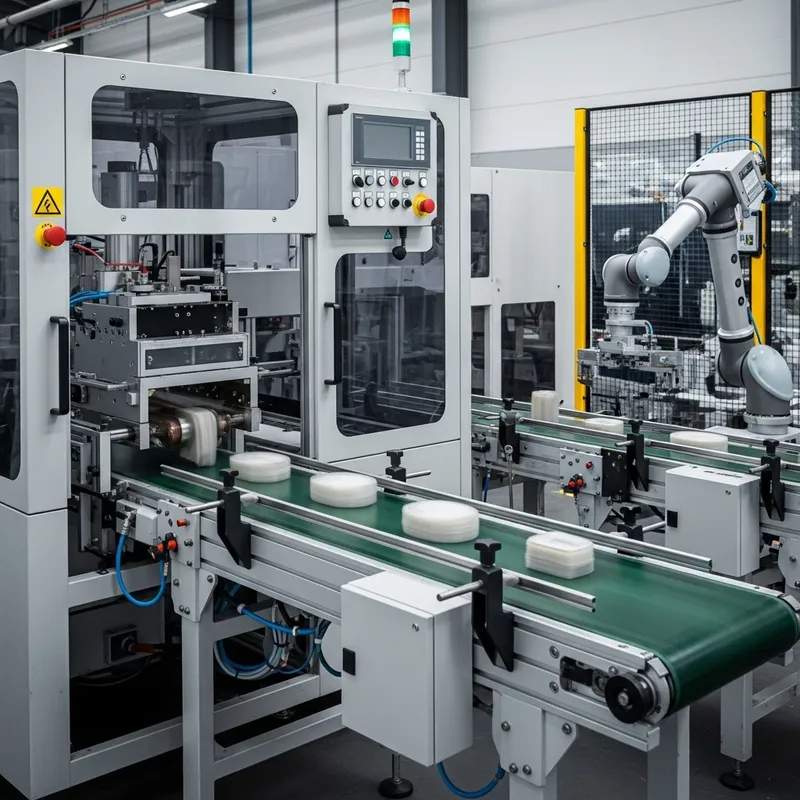
Precision is Rebuilt Everyday
There is also a fundamental difference in how value is sustained.
In platform businesses, once the system is built, the primary challenge is to keep it functional, scalable, and responsive. Improvements are iterative. Errors can often be rolled back.
Manufacturing works differently. Every single unit must be produced again — with the same precision, the same quality, and the same discipline — every day.
Trust in manufacturing is not built once. It is reproduced repeatedly. And that repetition is where durability comes from — and why progress is slower, but steadier.
Why Manufacturing Businesses Last Longer
Manufacturing is not weakened by slower growth. In fact, many manufacturing businesses last for generations.
Why?
Because once trust is earned:
- Switching costs are real
- Brand memory is strong
- Quality becomes institutional
- Relationships extend across families and decades
Manufacturing-led trust is slow to build — but also slow to disappear.
Some of the world’s most respected brands were not the fastest to grow, but the hardest to replace.
Why Subscription and Platform Businesses Grow Faster
Subscription-based and platform-led businesses — delivery services, SaaS tools, digital ecosystems — shift risk away from the customer.
They offer:
- Low entry cost
- Easy cancellation
- Immediate perceived value
- Fast feedback loops
Here, the customer is not asked to believe — only to try.
If a tool disappoints, it’s cancelled.
If a delivery service fails, it’s uninstalled.
If value drops, the subscription ends.
Trust is not demanded upfront.
It is tested continuously.
This allows these businesses to:
- Scale faster
- Experiment cheaply
- Adjust rapidly
- Grow before perfection
They can afford to build trust along the way.
Free Trials and Reversible Trust
Another often overlooked advantage of platform and subscription businesses is the ability to offer trust before payment.
Free trials — seven days, fifteen days, sometimes even months — allow customers to test reliability, usability, and value before committing financially. Trust is sampled, not assumed.
Manufacturing businesses don’t have this luxury.
A customer cannot meaningfully “trial” a refrigerator, a washing machine, or an electronic device and then return it without consequence. The moment of purchase carries full risk.
This single difference dramatically changes adoption speed.
Platforms invite trust gradually.
Manufacturing demands it upfront.

This Is Not About Services vs Products
The common mistake is to conclude:
“Services grow faster than products.”
That’s incomplete.
The real distinction is this:
Who carries the risk in the early stages — the company or the customer?
Manufacturing places the risk primarily on the company.
Subscription models distribute risk in smaller, reversible steps to the customer.
That single difference changes growth speed dramatically.
Recurring Revenue Is Not a Pricing Innovation — It’s a Trust Innovation
A one-time sale says:
“Trust us once.”
A subscription says:
“Judge us every month.”
This is why even high-cost software succeeds when offered as a subscription.
Not because it’s cheaper — but because commitment is gradual.
Customers aren’t buying affordability.
They’re buying optional continuity.
And optional continuity accelerates adoption.
The Hidden Fragility of Subscription Growth
Fast growth should not be confused with durable trust.
Subscription businesses:
- Can scale quickly
- Can also collapse quickly
Trust violations in subscriptions — dark patterns, forced lock-ins, declining value — are punished immediately through churn.
Manufacturing errors are expensive.
Subscription trust breaches are terminal.
Speed cuts both ways.
What Manufacturing Businesses Can Learn (Without Becoming Platforms)
The answer is not to abandon products or chase trends.
It is to reduce the trust burden on the customer, without diluting quality.
This can happen through:
- Service assurance
- Maintenance contracts
- Software layers
- Outcome-based commitments
- Strong post-sale accountability
The product remains central.
The relationship becomes continuous.
Aspirations follow visible momentum
There is also a quieter effect at play — one that rarely shows up in balance sheets.
Faster-growing models create faster-moving role models. They shape what ambition looks like to the next generation. When peers grow quickly, scale visibly, and earn recognition early, momentum itself becomes aspirational.
Manufacturing, by contrast, rewards patience. Progress is slower, less visible, and often lonely in the early years. The outcomes arrive later — but they arrive deeper.
Over time, this difference influences not just capital allocation, but career choices. Not because manufacturing lacks value, but because it demands a longer wait for validation.

A Final Reflection
Manufacturing should not feel diminished when compared to the rapid growth of subscription businesses.
What factories build is meant to endure — across families, communities, and generations.
Service-led innovation, on the other hand, reshapes how people live, work, and access value, often in ways physical industries cannot.
These are not opposing worlds.
They are different expressions of progress.
One gives society stability.
The other gives it speed.
Both deserve respect.
I’m curious how you see trust shaping the future of your industry. What’s your experience?”